


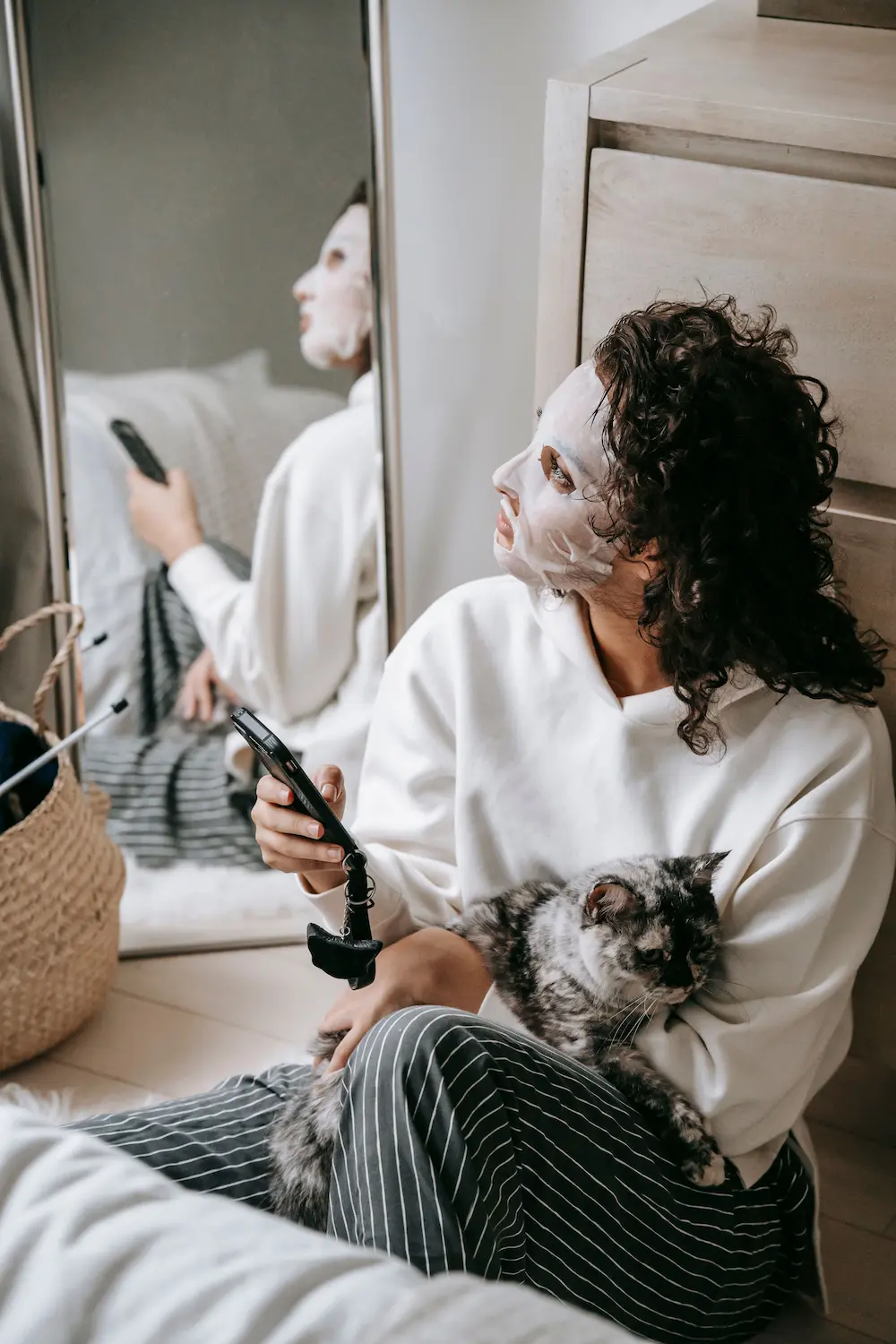
Why does my cat sit on me? Usually, your cat sits on you because you provide warmth, comfort, security, and familiar companionship. Cats can also learn that sitting on your lap leads to petting or attention. The exact reason varies from cat to cat, so the behavior shouldn’t be reduced to one explanation. Some cats actively seek physical contact, while others prefer sitting nearby.
Your lap can also combine several things your cat already likes: a warm resting place, a familiar smell, a predictable routine, and the presence of someone they trust. For many cats, that’s enough to make a human lap more appealing than an expensive cat bed.
Why Does My Cat Sit on Me?
Your cat may simply find you comfortable and safe. Sitting on you lets your cat rest while staying close to a familiar person.
Warmth is one obvious reason. Cats often seek comfortable warm spots, and your body provides steady heat. Your presence can also offer companionship and security, especially when your cat is already relaxed.
There can be more than one reason at the same time. Your cat might choose your lap because it’s warm, then stay because it enjoys your attention. Another cat might mainly want a quiet place to nap.
Why Do Cats Sit on Top of You?
Cats may sit on top of you because your body gives them warmth, contact, and a comfortable resting spot. Your chest, stomach, or legs can also provide a slightly elevated position compared with the surrounding furniture.
The location can matter less than the cat’s body language. A cat that settles down with a relaxed body is usually comfortable with the situation. A tense cat that repeatedly tries to leave is communicating something different.
Some cats also seem to prefer sleeping directly against their owners rather than beside them. That close contact gives them access to your familiar scent and physical presence.
Does My Cat Sit on Me Because It Trusts Me?
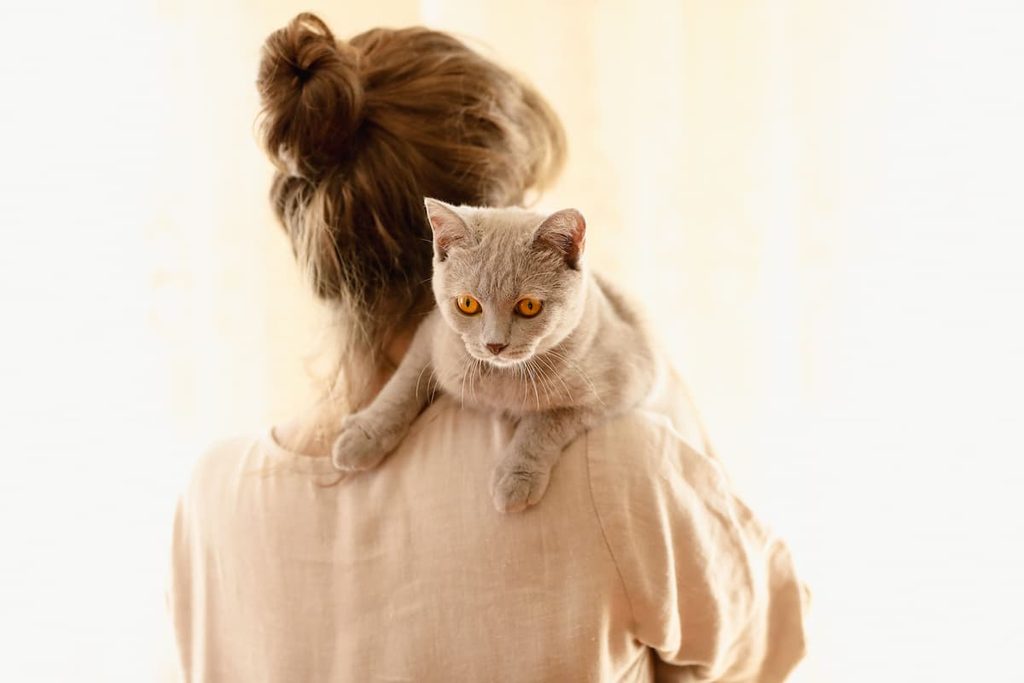
It can be a sign that your cat feels comfortable around you. Cats don’t all seek the same amount of physical contact, and some prefer to control when interaction happens. A cat that voluntarily chooses your lap is choosing to remain close to you.
Look at the whole interaction rather than the sitting behavior alone. A relaxed posture, normal breathing, soft eyes, and comfortable body position can help show that your cat is enjoying the contact.
That said, sitting on you doesn’t prove that your cat trusts you more than everyone else. Cats develop individual relationships with people, and their behavior can depend on personality and previous experiences.
Is My Cat Sitting on Me for Warmth?
Yes, warmth is one of the simplest explanations. Cats often choose warm and comfortable places for rest, including sunny areas, blankets, beds, and human laps.
Your body can function like a convenient heated resting place. This may become especially noticeable when the room is cool or when you’re sitting still for a long time.
Still, warmth doesn’t have to be the only reason. Your cat may enjoy the heat and your company at the same time.
Does My Cat Sit on Me for Affection?
It can be. Many cats enjoy physical closeness with people they are comfortable around. Lap-sitting gives them a chance to stay near you while receiving attention or simply sharing the same quiet space.
Some cats show affection very directly. They may climb onto your lap, sleep against you, rub against you, or follow you around the home. Others show attachment by sitting a few feet away.
This difference is normal. A cat doesn’t need to sit on you to have a strong bond with you.
Does My Cat Sit on Me Because It Wants Attention?
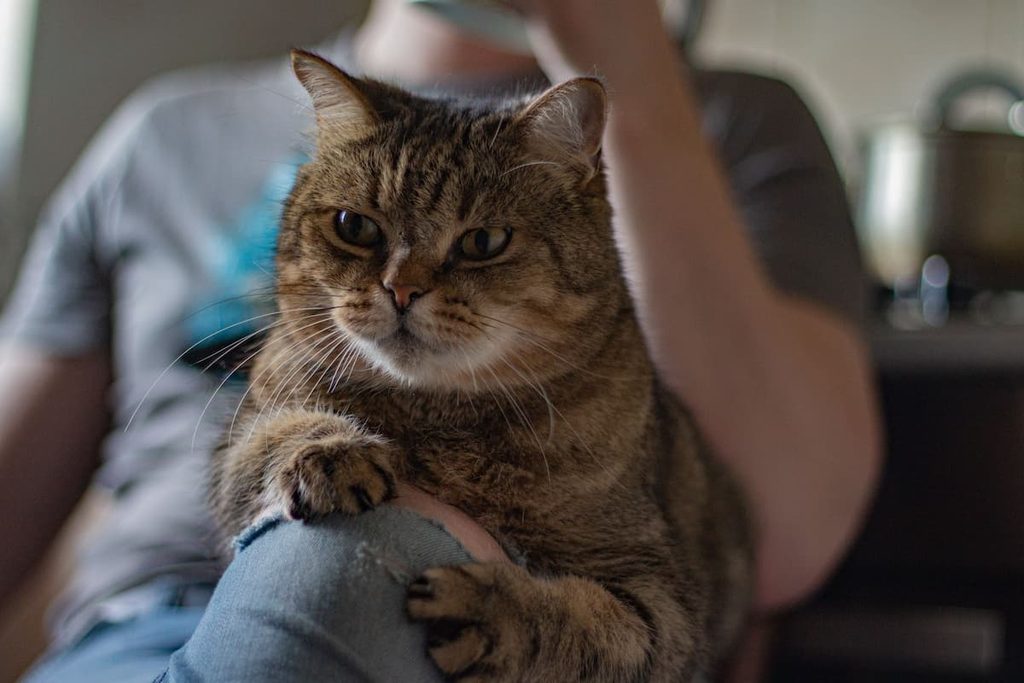
Sometimes your cat has learned that sitting on you gets a response. You might pet your cat, talk to it, scratch behind its ears, or give it attention whenever it climbs onto your lap.
Cats can learn through repeated interactions. If sitting on you consistently produces something your cat enjoys, the behavior may become part of its routine.
Pay attention to the timing. A cat that jumps onto your lap every evening may simply have developed a predictable social routine. A cat that climbs onto you and then starts meowing may be looking for something more specific, such as food or interaction.
Does My Cat Like My Scent?
Your familiar scent may contribute to your cat’s comfort. Smell plays an important role in feline communication and social behavior.
Cats use scent in several ways, including facial rubbing and other forms of scent exchange. Familiar smells can become part of the environment a cat recognizes as safe.
However, it’s better not to assume that every cat sitting on a person is “claiming” that person. Sitting on you can simply provide familiarity and comfort.
Why Does My Cat Sit on Me at Night?
Your cat may choose you at night because you’re warm, still, and familiar. A quiet person can make a convenient place to settle down without the movement and activity that happen during the day.
Some cats also develop strong nighttime routines. Once your cat learns that your bed or lap is a comfortable place to sleep, it may return to the same spot regularly.
If your cat has always behaved this way and otherwise seems healthy, nighttime lap-sitting usually isn’t something to worry about.
Why Does My Cat Sit on Me and Purr?
Purring can happen when a cat is relaxed and enjoying contact, but purring alone doesn’t explain exactly what your cat feels.
Look at the rest of the body language. A relaxed cat that settles comfortably, keeps a loose posture, and willingly remains close is showing a different picture from a tense cat that keeps shifting or trying to escape.
Context matters. Cats can purr in different situations, so don’t use purring as the only sign of happiness.
Why Does My Cat Sit on Me and Then Bite?
Your cat may want contact but reach its limit with petting. Some cats enjoy sitting on a lap but don’t enjoy continuous touching.
Petting-induced aggression can happen when a cat becomes overstimulated. Warning signs can include tail lashing, flattened or backward ears, tense body language, or changes in the eyes. Cornell’s feline behavior guidance recommends stopping interaction when these warning signs appear rather than forcing continued contact.
So, don’t assume that sitting on you means your cat wants unlimited petting. Let your cat decide when it has had enough.
Why Does My Cat Prefer Me Over Other People?
Your cat may prefer you because of familiarity, routine, past interactions, or individual social preference. Cats can form different relationships with different people.
Your cat may associate you with food, play, gentle handling, quiet time, or other positive experiences. That history can influence whom the cat chooses to approach.
This doesn’t necessarily mean your cat dislikes everyone else. It may simply have a stronger preference for spending time with you.
Why Does My Cat Suddenly Sit on Me More?
A sudden increase in clinginess can have a harmless cause, but a noticeable behavior change deserves attention. Your cat might be responding to a change in temperature, routine, environment, or household activity.
However, cats can also show illness or stress through changes in normal behavior. Increased clinginess can sometimes appear alongside other changes, so watch for reduced appetite, unusual tiredness, changes in litter box habits, hiding, or other signs that seem abnormal for your cat.
A major behavior change combined with other concerning symptoms is a good reason to speak with a veterinarian.
What If My Cat Never Sits on Me?
It doesn’t mean your cat doesn’t like you. Some cats simply prefer sitting beside their owners instead of directly on them.
Cats have different personalities and different preferences for physical contact. International Cat Care notes that some cats enjoy sitting on laps, while others prefer staying close without sitting directly on a person.
Your cat may show affection by following you, greeting you, rubbing against you, sleeping nearby, or choosing to stay in the same room.
Don’t force lap time. Giving your cat control over physical contact can make interactions more comfortable.
How Can I Encourage My Cat to Sit With Me?
Make your lap a comfortable option and let your cat choose whether to use it.
Sit somewhere quiet and avoid grabbing or pulling your cat onto your lap. A soft blanket can make your lap more inviting. When your cat approaches voluntarily, gentle petting may reinforce the positive experience.
Give your cat an easy way to leave. This is especially important for cats that don’t enjoy prolonged handling. Respecting those boundaries can help create more positive interactions over time.
The goal isn’t to turn every cat into a lap cat. It’s to make spending time with you feel safe and comfortable.
Frequently Asked Questions
What Does It Mean If Your Cat Sits on You?
If your cat sits on you, it usually means your cat feels comfortable, secure, or socially connected to you. Your body also offers warmth and a familiar place to rest. Sitting on your lap can therefore be both a comfort-seeking behavior and a form of social contact. The behavior alone does not prove one specific emotion, though, because cats have individual preferences.
How Can You Tell If a Cat Truly Loves You?
Cats can show affection through several behaviors, rather than one clear sign. Seeking your company, sitting on your lap, rubbing against you, kneading, slow blinking, grooming you, and approaching you with a relaxed upright tail can all indicate trust and positive social interaction. Cats Protection notes that individual cats differ in how they show affection, so the overall pattern matters more than any single behavior.
How Do You Tell If Your Cat Has Imprinted on You?
“Imprinting” isn’t the most precise term for the bond between an adult cat and a person. Cats can, however, develop strong social attachments to their caregivers. A cat that consistently seeks your company, follows you, sleeps on or near you, and chooses physical contact may have a strong bond with you. These behaviors suggest attachment and trust rather than proving literal imprinting in the scientific sense.
Are Male or Female Cats More Cuddly?
There is no strong evidence that male cats are universally more cuddly than female cats. Individual personality, early socialization, breed, life experiences, and neutering status can all influence how affectionate a cat becomes. Some owners perceive male cats as more affectionate, but that does not establish a general rule for all cats.
What Breed of Cat Is the Most Clingy?
There isn’t one scientifically proven “most clingy” cat breed, but some breeds are known for being especially people-oriented. Burmese cats, for example, are described by the Cat Fanciers’ Association as affectionate and strongly attached to their people. Ragdolls are also described as affectionate and placid, while Siamese cats are known for being affectionate, active, and highly social. Breed tendencies can influence behavior, but individual temperament still matters greatly.
This guide is part of our Is It Safe for Cats? guide collection — see the full guide for more.
Related Reading
How to Stop Snoring Tonight (and What Actually Fixes It Long-Term)
This companion guide is a useful next read if nighttime noise is affecting sleep in your home.
