


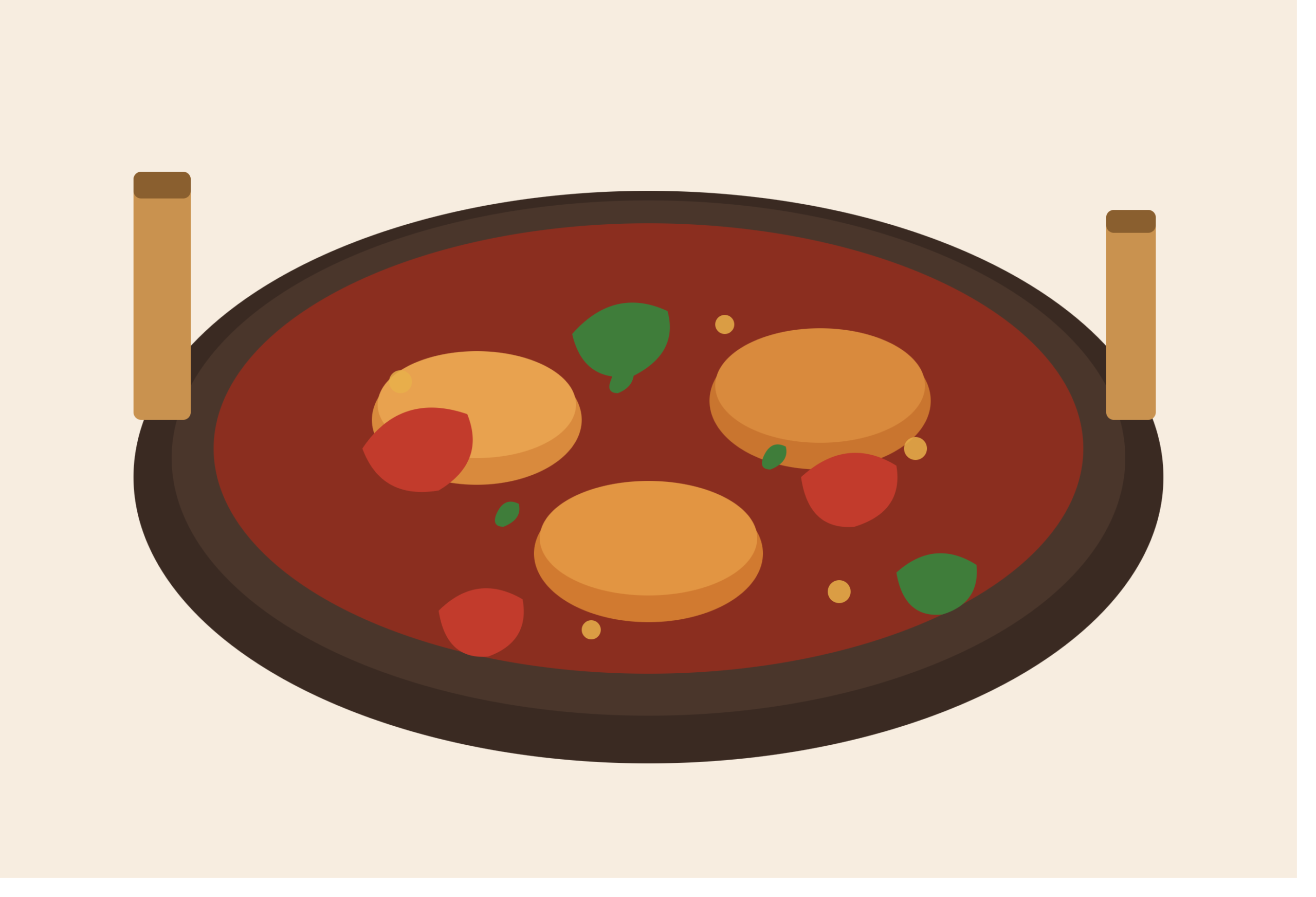
If you’re searching for the best pollo al chilindrón near me, here’s the direct answer: look for a Spanish or Basque restaurant that uses real jamón serrano and fresh bell peppers rather than a generic ham substitute, and simmers the sauce slowly instead of rushing it. That slow reduction is what turns a decent tomato and pepper sauce into the deep, sweet, slightly smoky one this dish is actually known for.
Pollo al chilindrón is a traditional Spanish chicken stew built from chicken, jamón serrano, bell peppers, tomatoes, garlic, and onion, usually finished with a splash of white wine. It comes from northern Spain, and depending on who you ask, it traces back to Aragón, Navarra, or the Basque Country, since all three regions claim it as their own.
What Pollo al Chilindrón Actually Is
I first had pollo al chilindrón at a small Basque restaurant, and I remember being surprised by how the sauce tasted almost sweet before the smokiness from the ham kicked in a second later. That layered quality, sweet pepper first, then a savory undertone, is the actual signature of the dish, not just a red sauce with chicken sitting in it.
The dish is traditionally made by browning chicken pieces, then building the sauce in the same pan with diced jamón serrano, sliced bell peppers, grated tomatoes, garlic, and onion, sometimes deglazed with white wine. It’s simmered until the chicken is tender and the vegetables have broken down into a thick, rustic sauce rather than a smooth puree.
Why the Name Confuses People
A lot of people assume “chilindrón” has something to do with chili peppers or spice, given how similar it sounds, but that’s not accurate. This dish is genuinely mild. One common explanation traces the name back to an old Spanish card game called chilindrón, where the loser of the game paid for the meal, though the connection isn’t something every source agrees on with full certainty.
Either way, if you’re expecting heat when you order the best pollo al chilindrón near me, you’ll likely be surprised by how gentle and vegetable forward the flavor actually is. The sweetness comes from slowly cooked bell peppers, not from any chili pepper at all.
Why “Near Me” Searches Are So Cluttered With Thin Content
If you’ve already searched for the best pollo al chilindrón near me, you’ve probably noticed that most results read almost identically to each other, repeating the same vague phrases about “authentic flavors” and “rich tradition” without ever naming a real restaurant, a real price, or a real regional detail. That’s a strong sign those pages were built to rank rather than to genuinely help anyone find a meal.
I ran into this myself while trying to find a place locally. Search results kept repeating the same generic description of the dish without ever telling me what to actually check for before ordering, so I ended up calling two Spanish restaurants directly and asking their kitchen staff how they made their sauce, which turned out to be far more useful than anything I found online.
What Separates a Good One From a Forgettable One
The clearest tell is the sauce’s texture. A properly made pollo al chilindrón has a thick, slightly chunky sauce where you can still make out softened pepper and tomato pieces, not a smooth, blended sauce that tastes more like a generic tomato base than a slow cooked stew.
The chicken itself should be fall apart tender, since this dish is traditionally simmered rather than quickly pan seared and served. If the chicken still has a slight bounce to it or feels like it was cooked quickly just before serving, that’s usually a sign the kitchen skipped the slow simmer that gives the dish its actual character.
Regional Differences Worth Knowing
Depending on which region’s version you’re served, you might notice real differences. Some cooks add a splash of brandy or sherry instead of white wine, while others skip the ham entirely for a lighter, more vegetable forward version. A few versions include black olives, which adds a briny note that isn’t part of every recipe.
None of these variations make a version less authentic on their own. It genuinely depends on which regional tradition the recipe follows, whether that’s Aragón, Navarra, or the Basque Country, and each region has a legitimate claim to the dish. If your first bowl tastes noticeably different from a description you read online, that’s likely a regional choice rather than a mistake.
Dietary and Allergy Considerations
This is a detail that’s almost entirely missing from other coverage of this keyword. Traditional pollo al chilindrón contains pork, since jamón serrano is a cured pork product, so it is not suitable for anyone avoiding pork for religious or dietary reasons unless the restaurant offers a ham free version.
The dish itself is naturally gluten free, since it’s built from chicken, peppers, tomatoes, garlic, and onion with no flour based thickener in most traditional recipes. It’s also dairy free in its classic form. If you’re ordering for someone with a pork restriction, it’s worth asking directly whether the kitchen can prepare it without the jamón serrano, since some versions can be made that way without losing the core flavor of the dish.
Reasonable Price Expectations
At a casual Spanish or tapas style restaurant, a plate of pollo al chilindrón typically runs somewhere in the 14 to 20 dollar range in most mid sized US cities. At an upscale Spanish restaurant that treats it as a signature dish, the same plate can run 24 to 32 dollars, largely due to presentation and portion size rather than meaningfully different ingredients.
I paid around 16 dollars for a generous portion at a small family run Spanish spot, and it was noticeably better than an 28 dollar version I tried later at a trendier restaurant that used a thinner, less reduced sauce. Price alone genuinely doesn’t guarantee authenticity here.
How to Judge Quality Before You Order
A few quick questions can save you from a disappointing plate. Ask whether the kitchen uses jamón serrano specifically rather than a generic ham or bacon substitute, since that swap changes the flavor noticeably. A kitchen that takes the dish seriously will usually answer that question specifically rather than vaguely.
It also helps to ask how long the sauce simmers. A kitchen that mentions a specific time, even something like 30 to 40 minutes, is a better sign than one that gives a vague answer, since that slow reduction is what builds the dish’s actual depth of flavor.
Bringing It All Together
If your search for the best pollo al chilindrón near me keeps turning up thin, repetitive articles instead of real answers, trust your own questions over what you read online. Ask about the ham, ask about the simmer time, and don’t assume a higher price automatically means a better plate, since that isn’t consistently true with this dish.
One thing worth trying if you enjoyed hunting down an authentic pollo al chilindrón: the same detective work applies to other regional dishes that get buried under generic “near me” content, like tracking down the best sopa criolla near me or the best chuflay cocktail near me, both of which face the exact same problem of thin content standing between you and a genuinely good meal.
Frequently Asked Questions
What is pollo al chilindrón exactly?
Pollo al chilindrón is a traditional Spanish chicken stew made with chicken, jamón serrano, bell peppers, tomatoes, garlic, and onion, typically finished with white wine and simmered slowly until the sauce thickens and the chicken becomes tender.
Is pollo al chilindrón spicy?
No, despite how the name sounds, this dish is mild. The flavor comes from slowly cooked sweet bell peppers and tomatoes rather than any form of chili pepper or added heat.
Does pollo al chilindrón contain pork?
Yes, in its traditional form it contains jamón serrano, a cured Spanish ham, which makes it unsuitable for anyone avoiding pork. Some restaurants can prepare a ham free version on request without significantly changing the core flavor.
Is pollo al chilindrón gluten free?
Yes, in its traditional preparation. The dish relies on chicken, vegetables, and ham with no flour based thickener, though it’s always worth confirming with the specific restaurant since side dishes like bread may not be gluten free.
Where does pollo al chilindrón originate from?
It comes from northern Spain, though the exact region is debated. Aragón, Navarra, and the Basque Country each claim the dish as part of their regional culinary tradition, and all three versions are considered legitimate.
How can I tell if a restaurant’s pollo al chilindrón is authentic?
Ask specifically whether they use jamón serrano rather than a generic ham substitute, and ask roughly how long the sauce simmers. A thick, slightly chunky sauce with tender, fall apart chicken is a strong sign of an authentic, properly made version.
