


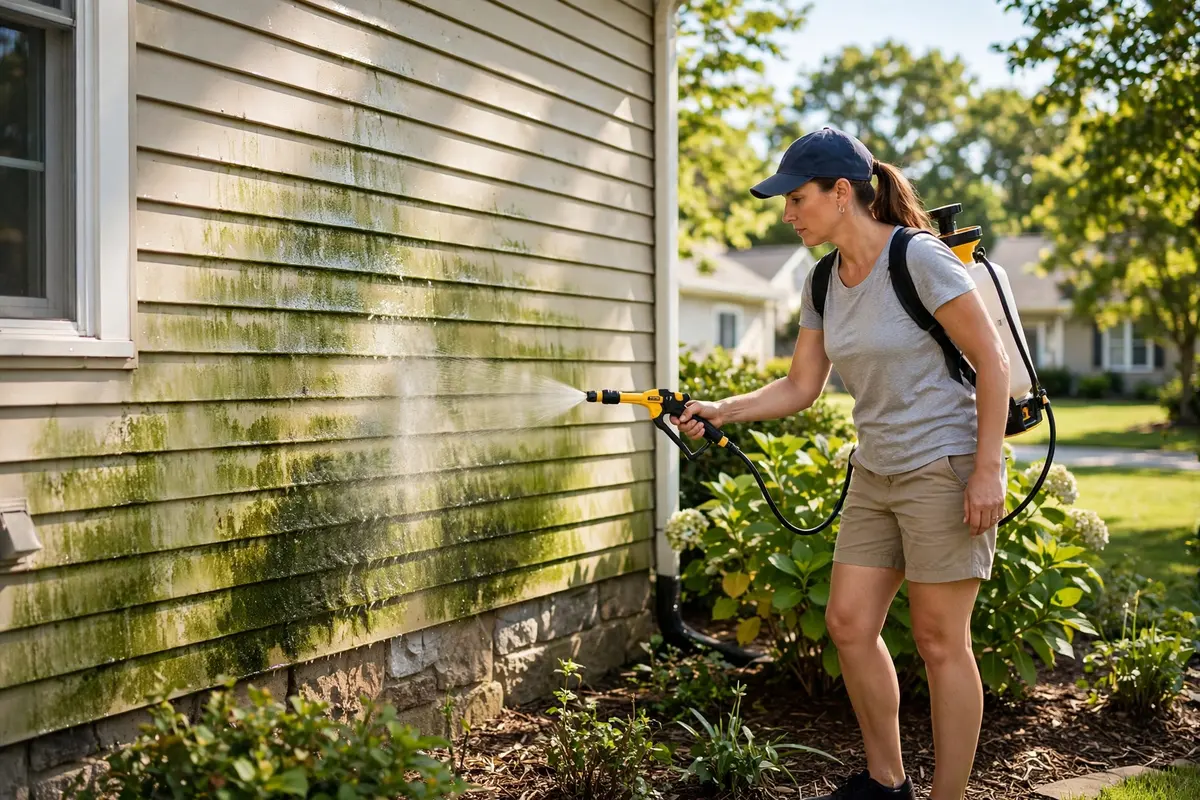
30 Seconds Outdoor Cleaner is a bleach-based spray cleaner built for one job: removing the stains that algae, mold, mildew, and moss leave on outdoor surfaces such as decks, concrete, siding, and fences. You spray it on, keep the surface wet for a few minutes, scrub, and rinse it off with a hose. The name promises speed, and the formula does start working on contact, but no version of the label finishes the job in half a minute. Real contact times run from a few minutes to about fifteen, depending on the surface. For pet owners, the manufacturer’s rule is plain: keep pets and children indoors while you apply it, and let them back onto the surface only after it has been rinsed and allowed to dry.
What Is 30 Seconds Outdoor Cleaner?
30 Seconds Outdoor Cleaner is the fast-acting product in the 30 Seconds range, a brand whose original formula dates back to 1977. Its cleaning power comes from sodium hypochlorite, the active ingredient in household bleach. The Australian specification sheet lists it at 50 grams per litre with a pH of around 11, which explains two things at once: why it strips organic stains quickly, and why it can bleach coloured fabric on contact.
It comes in three broad formats: a concentrate you dilute yourself, ready-to-use spray bottles for small jobs, and hose-end sprayer versions that mix as you spray. Check which one you bought before starting, because only the concentrate needs mixing.
One confusion is worth clearing up early. The same brand sells 30 Seconds Spray & Walk Away, which sounds like a sibling but behaves like a different product entirely: it uses benzalkonium chloride instead of bleach, needs no scrubbing or rinsing, and works slowly over weeks. Nearly everything below covers the original Outdoor Cleaner, not the walk-away version.
What Does 30 Seconds Outdoor Cleaner Clean?
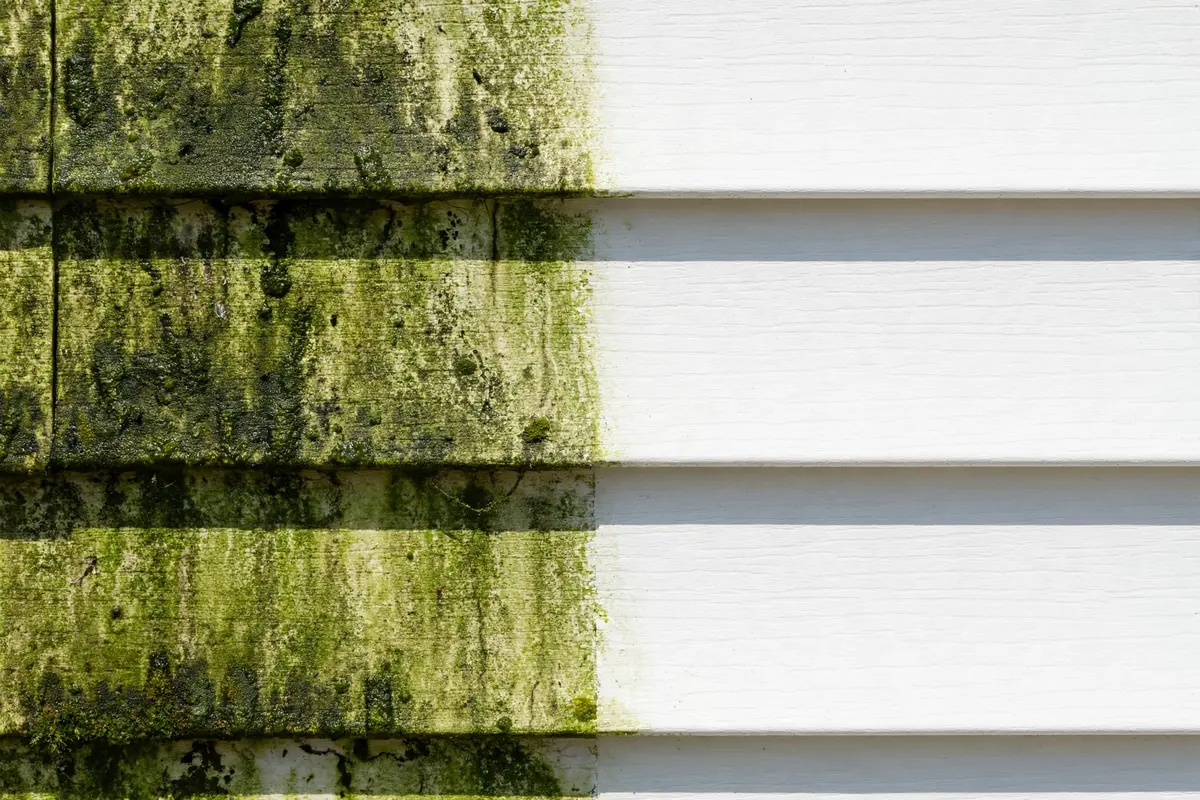
The cleaner targets stains caused by organic growth: green and black algae, mold, mildew, and moss. Those growths produce the slippery green film on shaded paths, the black streaks running down siding, and the dark patches that creep across a deck over winter. Because the stains come from living growth rather than plain dirt, a bleach-based cleaner can lift them in minutes, without pressure washing.
Manufacturer and retailer listings give a long list of suitable surfaces, including:
- Wood and composite decks
- Concrete sidewalks, driveways, pavers, and tiles
- Vinyl and other types of siding
- Brick walls and masonry
- Asphalt driveways
- Plastic outdoor furniture and most canvas awnings
- Painted surfaces, metal, and fiberglass
On coverage, US product listings state that one gallon of concentrate cleans up to 200 square feet on porous surfaces and up to 600 on non-porous ones. The same listings describe a lighter one-to-four mix, left wet about four times longer, to stretch coverage over larger, lightly stained areas. Treat those figures as a best case rather than a guarantee, since thick growth and porous surfaces drink more product.
The cleaner also works as a prep wash before exterior painting, staining, or varnishing, since growth left under a fresh coat keeps working against it.
What Should You Not Use 30 Seconds Outdoor Cleaner On?
Some limits come straight from the manufacturer. Official guidance says to avoid untreated metals, powder-coated surfaces, high-gloss paintwork, and fabric, because the formula can corrode, dull, or bleach them. US directions soften the metal point slightly, calling the cleaner non-corrosive to metals when used as directed at short contact times. The honest reading: painted or treated metal at brief contact is fine; bare, untreated metal is a risk not worth taking.
Coloured fabric deserves the same caution. Listings say most canvas awnings are suitable, yet the manufacturer warns plainly that sodium hypochlorite will bleach coloured fabrics and shade cloth. If the fabric’s colour matters to you, test a hidden corner first or choose a bleach-free product for that job.
There are also whole jobs this cleaner is the wrong tool for:
- Lichen. The manufacturer states that Outdoor Cleaner does not treat lichen and directs users to Spray & Walk Away instead.
- Indoors. The product is for outdoor use only.
- Glass it dries on. Do not let the cleaner dry on glass, and give windows an extra rinse after nearby cleaning to prevent residue.
- Plain dirt, oil, and rust. The formula is built for stains from living growth. Ordinary grime and rust stains are different problems that need different cleaners.
30 Seconds Outdoor Cleaner Instructions, Step by Step
Follow these 30 seconds outdoor cleaner instructions in order, and the job usually takes one pass. You need the cleaner, a pump or tank sprayer for larger areas (a trigger bottle is fine for small spots), a stiff brush, a garden hose, gloves, and eye protection.
- Put on gloves and eye protection. Label and retailer precautions call for both, and a bleach solution at pH 11 is not something you want in your eyes.
- Mix the concentrate one-to-one. If you bought the concentrate, mix equal parts product and water in your sprayer. Ready-to-use and hose-end versions skip this step.
- Bring pets and children inside, and prep your plants. Wet down foliage and lawn near the work area with plain water, or cover delicate plants. The plant section below explains why this step matters.
- Apply to a dry surface and saturate it. Work in sections small enough that each one stays wet for the full contact time.
- Keep the surface wet for the label time. US directions break it down by surface: up to 3 minutes for metal, plastic, cloth, painted surfaces, and fiberglass; up to 5 minutes for wood and composite, brushed with the grain; up to 15 minutes for concrete, masonry, tile, and asphalt. Australian guidance instead sets a 5-minute minimum for general build-up and 10 minutes for tough black mold. The ranges genuinely differ between versions, so your own bottle’s label wins over any guide, including this one.
- Scrub where growth is thick. Brushing is part of the method, not an optional extra. For heavier stains, reapply before rinsing and brush again rather than letting the first coat dry out, because the cleaning action stops once the surface dries.
- Rinse thoroughly with the garden hose. Rinse the cleaned surface, any plants that caught overspray, and nearby windows.
- Let the surface dry completely before pets and children return. This is the manufacturer’s stated condition for safe contact, covered in the next section.
Is 30 Seconds Outdoor Cleaner Safe Around Pets?
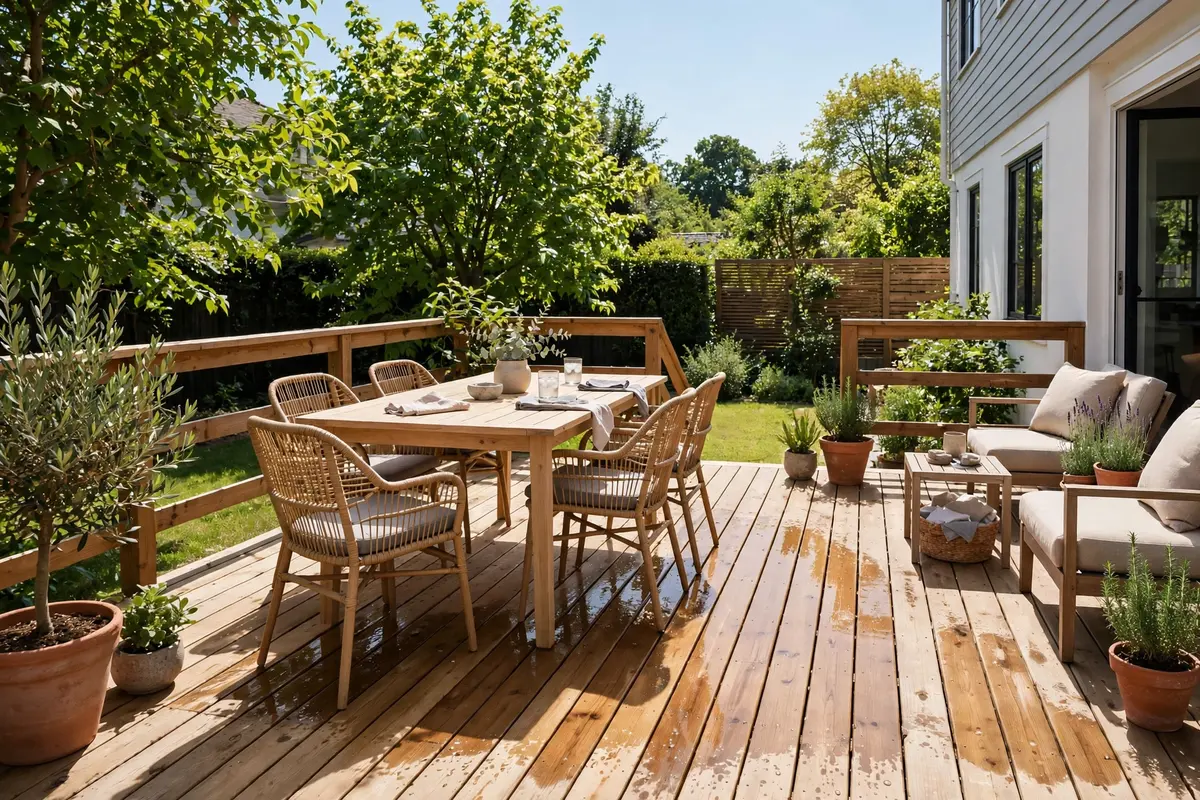
Not while it is wet. The manufacturer’s own FAQ answers this one directly: keep children and pets indoors during application, and once the surface has been rinsed off and allowed to dry, it is safe for pets and children to come into contact with the treated area.
The risky window is the wet stage. A dog crossing a freshly treated deck picks the solution up on its paws, and dogs and cats alike groom by licking. That is the exposure the indoor rule exists to prevent. If your pet does walk through a wet treated area, rinse its paws with fresh water before it can lick them.
Two habits keep the risk near zero: store the bottle out of reach of children and pets, as the precautions direct, and never mix the cleaner with other cleaning products. Also be skeptical of roundup articles calling it non-toxic and unconditionally pet-safe. The manufacturer’s guidance is stricter than that marketing language, and it is the version to follow.
Will It Harm Your Plants and Lawn?
It can, if overspray sits on foliage. The manufacturer states that all overspray must be rinsed off foliage and lawn, and warns that some plant and lawn types are sensitive even though the ingredients are biodegradable. Retail guidance tightens the timing: rinse any foliage or grass that catches spray within about ten minutes.
In practice, three habits protect a garden. Wet plants down before you start, since saturated leaves absorb less of anything that lands on them. Rinse them again as soon as you finish the section nearby. Cover genuinely delicate plants rather than trusting your aim with a sprayer.
Water features need care too. Product information warns that the cleaner should not enter drinking water reservoirs, lakes, or streams. Pool surrounds are fine to clean, but minimise overspray reaching the pool or a pond.
Wet and Forget vs 30 Seconds: Which One Fits Your Job?
The wet and forget vs 30 seconds question comes up constantly because both products attack the same green and black stains. They do it with opposite chemistry and opposite schedules, so the better choice depends on the job in front of you.
| 30 Seconds Outdoor Cleaner | Wet & Forget Outdoor | |
|---|---|---|
| Active ingredient | Sodium hypochlorite (bleach-based) | Benzalkonium chloride |
| Method | Spray, scrub, then rinse off | Spray and leave; no rinsing or scrubbing |
| Visible results | Same session, within minutes | Gradual; green stains in weeks, heavy black stains can take 6–12 months |
| Concentrate mixing | 1 part product to 1 part water | 1 part product to 5 parts water |
| Rule for pets | Keep indoors during use; allowed back once rinsed and dry | Keep off the surface until it dries; rinse paws if a pet walks on it wet |
| Rule for plants | Rinse overspray off foliage and lawn promptly | Do not spray plants directly; cover or rinse to protect them |
| Lichen | Does not treat it | Sold as a mould, lichen, and algae remover |
Choose 30 Seconds Outdoor Cleaner when the surface needs to look clean today: a deck before guests arrive, siding before painting, or a slippery path you want made safe in one session. The trade is your labour — scrubbing and rinsing are built into the method — plus bleach discipline around anything coloured.
Choose Wet & Forget when the area is large, hard to scrub, or on a maintenance cycle, and nobody needs the result this weekend. Its formula keeps working with wind and rain after you spray, and the manufacturer says treated surfaces can stay clean for a year or longer. Bleach-free does not mean harmless, though: its safety data still lists skin irritation, serious eye irritation, and toxicity to aquatic life, and its label also calls for gloves and eye protection.
Mistakes That Make 30 Seconds Outdoor Cleaner Disappoint
Most disappointing results trace back to one of these, rather than to the product itself.
- Spraying it on and walking away. The manufacturer is blunt on this point: leaving Outdoor Cleaner on a surface without scrubbing and rinsing will not clean it. That leave-it method belongs to the other product line.
- Letting it dry mid-job. The cleaning action stops when the surface dries, so a large driveway sprayed all at once on a hot day can fail section by section. Work in smaller areas and keep each one wet for its full contact time.
- Skipping the test patch. Retailer precautions advise testing a small, inconspicuous area first on delicate surfaces. Two minutes of testing beats a visible mistake on the most visible board of the deck.
- Spraying anything coloured without checking. Bleach does not negotiate. Cushions, shade cloth, and coloured awning fabric can come out permanently lighter.
- Reaching for it against lichen. Lichen is the one common growth the manufacturer explicitly excludes, so scrubbing harder will not change the answer.
Related reading: Learn what a carport is and check our guide to luxury vinyl plank (LVP) flooring.
Related reading: Learn more about blue dots on phone screen and why they appear on Android.
Frequently Asked Questions
Do You Have to Rinse 30 Seconds Outdoor Cleaner Off?
Yes. The manufacturer says the cleaner is designed to be sprayed on, scrubbed, and rinsed off for best results, and that leaving it on the surface without scrubbing or rinsing will not clean the surface. Rinse with a garden hose, and give windows an extra rinse so no residue dries on the glass.
How Long Should You Leave 30 Seconds Outdoor Cleaner On Before Rinsing?
It depends on the surface and on which label version you hold. US directions allow up to 3 minutes on metal, plastic, and painted surfaces, up to 5 minutes on wood and composite, and up to 15 minutes on concrete and masonry. The manufacturer’s Australian guidance instead sets a 5-minute minimum for general build-up and 10 minutes for tough black mold. Regional labels genuinely disagree, so follow the timing printed on your bottle.
Is 30 Seconds Outdoor Cleaner Safe for Dogs and Cats After It Dries?
Yes, according to the manufacturer’s FAQ. Once the treated surface has been rinsed off and allowed to dry, pets and children can safely come into contact with it. During application and while the surface is still wet, the same guidance says to keep them indoors.
Does 30 Seconds Outdoor Cleaner Remove Lichen?
No. The manufacturer states that Outdoor Cleaner does not treat lichen and recommends 30 Seconds Spray & Walk Away for it instead, because that product’s active ingredient is designed for lichen. Wet & Forget is the other established option for lichen.
Can You Use 30 Seconds Outdoor Cleaner on a Roof?
Retailer listings for the concentrate name roofs among its target surfaces, so the product is sold for that use. The catch is practical: the method involves scrubbing and rinsing, which is awkward, slippery work at height. Many homeowners pick a no-rinse, walk-away product for roofs for that reason alone.
Can You Use 30 Seconds Outdoor Cleaner on Composite Decking?
Yes. Composite is on the manufacturer’s surface list, and the US directions place wood and composite in the same group: keep the surface wet for up to 5 minutes, brush along the boards, then rinse thoroughly. Test a hidden spot first if the decking is coloured, since the formula contains bleach.
Why Did My Stained Wood Deck Look Blotchy After Cleaning?
The US directions warn about exactly this: stained wood can become blotchy in appearance after cleaning. The stated remedy is re-staining the wood. A test patch on an inconspicuous board is the way to see the effect before committing to the whole deck.
This guide is part of our Home Improvement Basics guide collection — see the full guide for more.
