


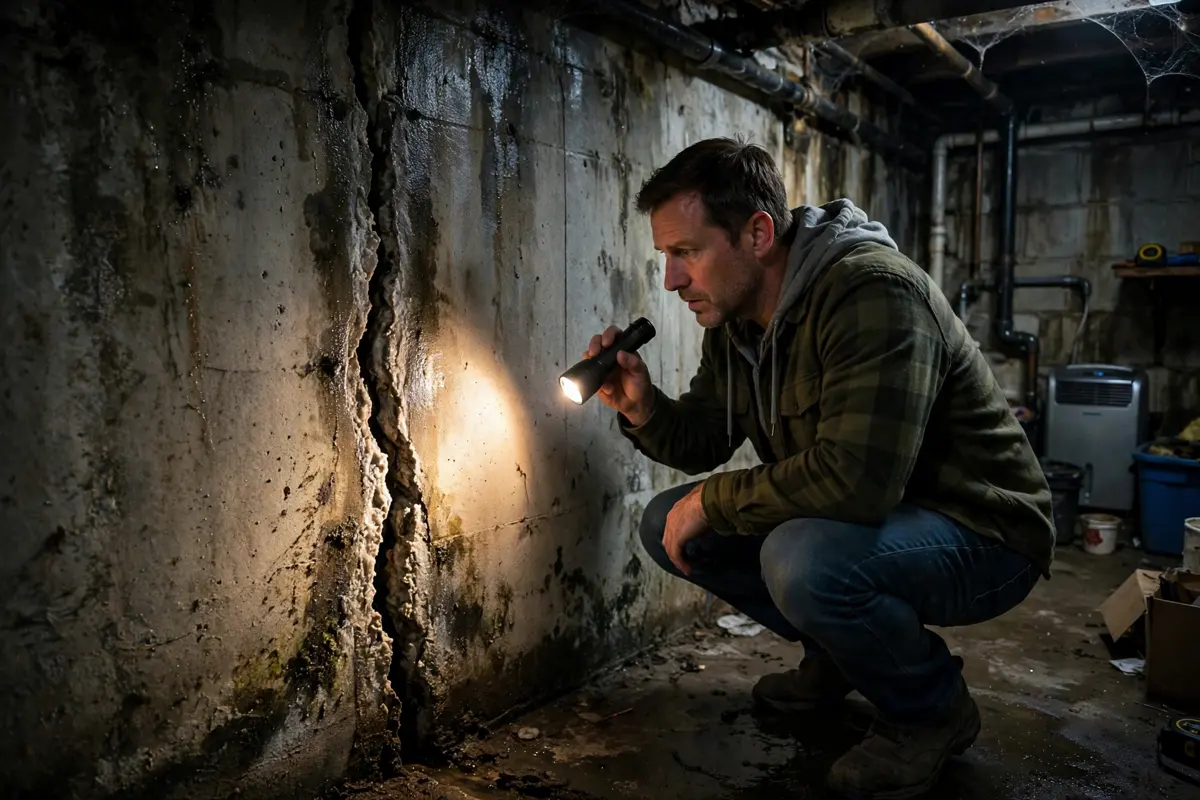
Most basement crack repair starts with one decision: is this crack just concrete shrinking, or is the foundation moving? A thin vertical hairline crack, usually under 1/8 inch wide, with no leak and no change over time, is often a shrinkage crack. You can usually seal it and watch it. A crack that is horizontal, stair-step shaped, wider than 1/4 inch, leaking, or getting longer needs professional foundation crack repair advice. Direction, width, and movement matter more than how ugly the crack looks.
That check saves money in both directions. Sealing a harmless crack stops water and soil gas getting in, and calling a pro early for a moving crack prevents a much larger job later. If you are planning several basement jobs at once, the complete home improvement guide helps you put crack repair in the right order, before finishing walls or laying flooring.
What Causes Basement Wall Cracks?
Concrete cracks for a few predictable reasons. The most common is shrinkage: fresh concrete loses water as it cures and pulls inward as it dries, and uneven pull opens a fine crack. These often appear in the first year and then stay the same size.
Settling is different. Soil under a footing can compress, wash away, or dry out and shrink, so one part of the foundation drops more than the rest. That can open diagonal cracks, cracks wider at one end, and cracks near windows and doors.
Water pressure is the third big cause. Waterlogged soil pushes sideways against a basement wall: that push is hydrostatic pressure. Freeze-thaw cycles add to it. Over time it can bow a wall inward and open a long horizontal crack.
How to Read a Crack Before You Repair It
Do not start with filler. Start with four checks, and write down what you find.
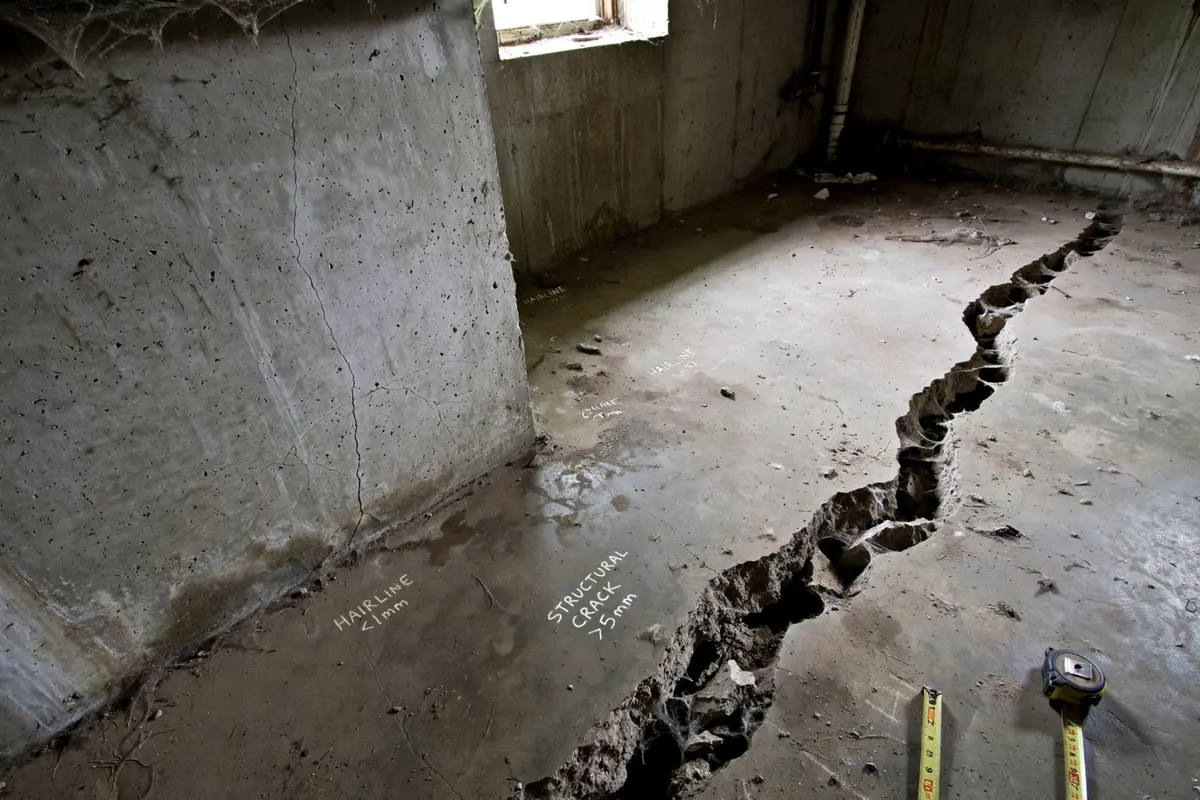
First, measure the width at its widest point. As a rough guide used by many inspectors, cracks under 1/16 inch are usually hairline, cracks around 1/8 inch deserve sealing and monitoring, and cracks over 1/4 inch deserve a professional look. Width alone does not prove a structural fault, but wider cracks need more respect.
Second, note the direction. Vertical cracks are often linked to shrinkage or mild settling. Diagonal cracks can point to uneven settling. Horizontal cracks are treated with the most caution, because they often line up with sideways soil pressure and wall bowing. In a block wall, a stair-step crack that follows the mortar joints is also a warning sign, especially if it keeps stepping across the wall.
Third, check if the wall is still flush. If one side sits higher than the other, the wall has shifted, not just split. Look along the wall for bowing too: even a small inward bow changes the job from sealing to stabilising.
Fourth, look for water and change. Damp patches, white mineral crust called efflorescence, mould, and a musty smell suggest water is using the crack as a path. Mark both ends with a pencil, add the date, and take a photo with a coin for scale. Check again after heavy rain. A crack that grows is active, and active cracks should not be hidden behind a rigid patch.
Is a Hairline Basement Wall Crack Normal?
Yes, in many homes a hairline basement wall crack is normal. It is most often a shrinkage crack from curing, or a response to small temperature changes that make concrete expand and contract slightly. It is usually thin, vertical or slightly wandering, and stable.
Normal does not mean ignore it forever. Even a hairline crack can let in moisture and radon gas. Sealing a stable one is sensible, and so is checking it twice a year. If it widens, lengthens, leaks, or new cracks appear nearby, treat it as a new problem, not an old cosmetic one.
Which Cracks Need Foundation Crack Repair, Not Just Sealing?
Sealing and foundation crack repair are not the same job. Sealing keeps water out of a stable crack. Structural repair stops movement, restores strength, or holds a wall in place. You need the second conversation if you see any of these signs:
- A horizontal crack, especially in the middle third of the wall
- A wall that bows, leans, or has slid inward at the base
- A stair-step crack in blockwork that is wide or still growing
- A crack wider than 1/4 inch, or one side higher than the other
- Cracks paired with sticking doors, sloping floors, or cracked drywall upstairs
- Repeated leaks, flooding, or soil washing in after rain
- Several new cracks appearing at the same time
A waterproofing contractor is the right first call for a leaking, stable crack. A foundation contractor or structural engineer is the better call for bowing or ongoing movement. An independent engineer has no repair to sell you, so their assessment can be a useful first step if you are unsure.
Do not let anyone inject or patch a bowing wall and call it fixed. Injection fills a crack. It does not straighten a wall, hold back soil, or lift a settled footing. Those jobs use different methods, such as carbon fibre straps, wall anchors, or piers, and they need a proper diagnosis first.
Planning to finish the basement once the wall is stable? If a gaming corner is part of that plan, our gaming keyboard vs regular keyboard comparison helps you pick the right board for it.
Basement Crack Repair Methods, Compared
The right method depends on three questions. Is the crack leaking? Is the wall still moving? Is the wall poured concrete or block? Block walls have hollow cores, so injection works differently there than on solid poured walls.
Epoxy Injection
Epoxy is a rigid resin pushed into a crack under low pressure through small ports stuck to the wall face. It bonds the two sides together, so contractors often choose it for a dry, dormant crack in poured concrete where restoring strength matters.
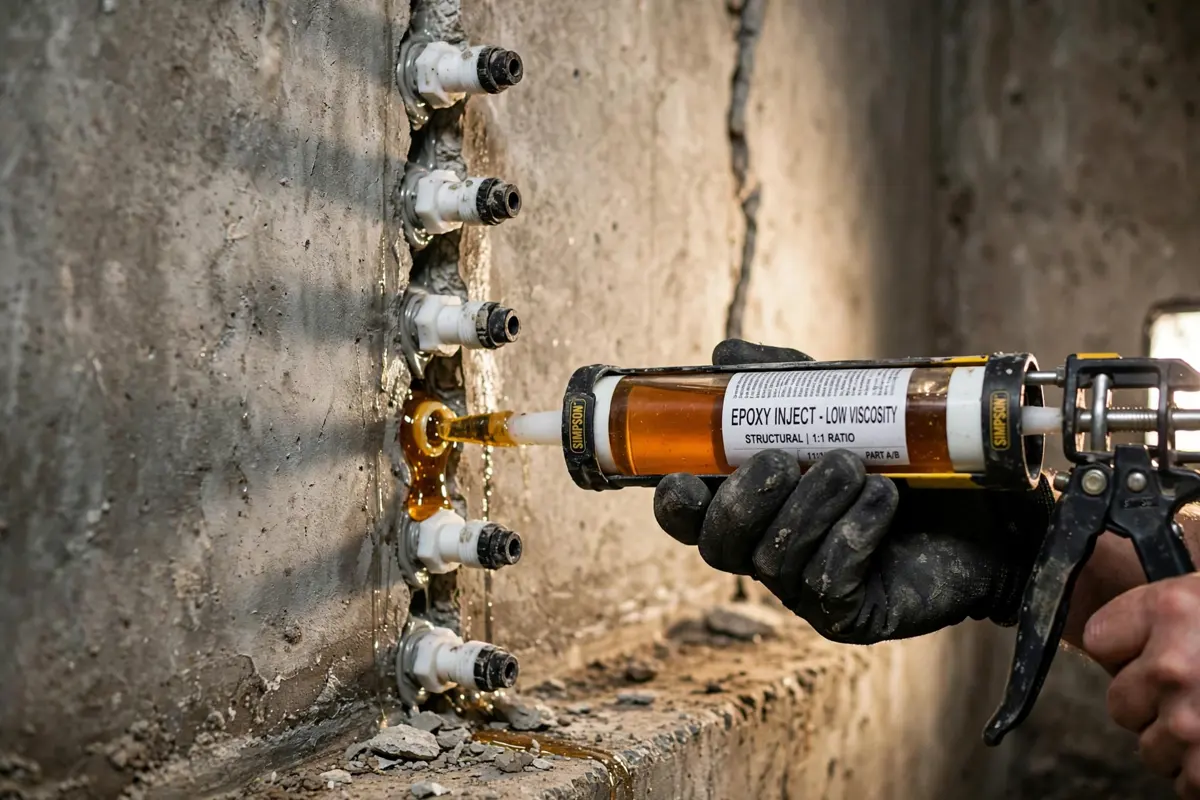
Epoxy needs a reasonably dry crack to bond well, so it is a poor match for an actively leaking crack. It also has little give: if the crack moves again, the repair or the concrete beside it can crack again.
Polyurethane Injection
Polyurethane resin reacts with water and expands into a flexible foam. That makes it the common choice for a leaking crack, because it can fill the full depth of the crack and flex with small seasonal movement.
Polyurethane is mainly a waterproofing repair: it stops water well, but does not restore strength the way epoxy can. Some jobs need both, polyurethane first to stop water, then a structural method. Ask any contractor why their material fits your crack.
Hydraulic Cement and Surface Fillers
Hydraulic cement expands as it sets and can plug a small, active drip in a hole or at a pipe entry. Concrete caulk and surface fillers can tidy a very fine, dry, non-structural crack.
Treat these as limited fixes. Surface filler does not fill the crack through the wall, so water pressure can push it out or pass behind it. Paint and coatings have the same limit: they can reduce damp, but they do not stop water under pressure and they hide a crack you should be monitoring.
Exterior Repair and Wall Stabilisation
Exterior work means digging to the footing, sealing the wall from outside, and often adding a membrane and drainage. It attacks the problem from the water side, but costs far more and disrupts paving and planting.
Can You Do Basement Crack Repair Yourself?
You can often handle a small, stable, non-structural crack yourself. Good DIY candidates are narrow, vertical, not bowing the wall, and not paired with any warning signs listed above. A low-pressure injection kit for poured concrete is the most complete DIY option. Simple caulk or filler is only a cosmetic, short-term option.
A careful DIY injection follows the same basic order as a pro job:
- Clean the crack and the wall around it with a wire brush, and remove paint, dust, and loose material.
- Fix surface ports along the crack, then seal between the ports with the surface paste supplied in the kit, leaving the ports open.
- Inject from the lowest port upward, moving up only when resin appears at the next port.
- Let the material cure for the time stated by the maker, then remove the ports and surface seal if the kit says to.
- Watch the repair through the next few heavy rains, not just the next day.
Follow the kit maker’s instructions over any general guide, because resins differ. Wear gloves and eye protection, and ventilate the room. Stop and get advice if water is flowing rather than seeping. A DIY repair rarely comes with a warranty, so if the basement is finished or the crack leaks a lot, a documented pro repair is often worth more than the saving.
Fix the Water, Not Just the Crack
Many cracks leak because water is sent toward the foundation. Sealing without changing that leaves the same pressure, and water may appear at the next weak point. Start outside: soil should slope away from the house, gutters should be clear, and downspouts should discharge well away from the wall.
Inside, repeated water at the base of the wall can point to a wider drainage problem. Understanding how drain tile handles basement water helps you judge that difference. A single leaking crack in an otherwise dry basement is usually a crack job; water at several points or at the floor joint is usually a drainage job.
How Much Does Basement Crack Repair Cost?
Published prices disagree a lot, so treat any single figure with care. Region, crack length, access, wall type, and whether the basement is finished all change the quote, and some sources quote material only while others include labour and a warranty.
As a broad guide from current contractor and guide pricing, a DIY injection kit often falls in the low hundreds of dollars per crack, while professional injection is often quoted in the mid hundreds to over a thousand dollars per crack. Exterior excavation and stabilisation sit in a different price band entirely, often reaching several thousand dollars or more. These ranges are not quotes for your house.
Mistakes That Make a Crack Worse
The most common mistake is covering a crack before you know if it moves. Paint, panelling, and a hard surface patch hide the evidence you need, so photograph and date the crack first. Also do not ignore the outside grade because the inside repair looks neat: if downspouts still dump beside the wall, pressure will build again. And do not assume every crack needs the biggest repair on offer. A stable hairline crack does not need piers.
Frequently Asked Questions
Does a repaired basement crack lower home value?
A properly repaired and documented crack usually hurts value less than an open, leaking crack found during an inspection. Keep the invoice, warranty, and before-and-after photos. Disclosure rules vary by place, so follow your local rules and be straight about what was repaired and when.
Can I finish a basement right after crack injection?
Wait until the repair has cured for the period the product or contractor specifies, then check it through at least one heavy rain if you can. Covering a fresh repair with drywall right away removes your chance to spot a leak early, and trapped moisture behind new walls can lead to mould.
Will sealing a crack stop radon from entering?
Sealing cracks can reduce one entry path for soil gas, but it is not a complete radon solution on its own. Radon levels vary by area and house, and testing is the only way to know your level. If your test is high, you need a proper mitigation system, not just crack filler.
How long does an injection repair last?
Makers and contractors give different figures, and real life depends on movement and water pressure more than on the resin alone. A repair in a stable crack can last many years, while a repair in a crack that keeps moving can fail quickly. That is why the warranty terms, and whether movement is covered, matter more than a headline lifespan.
Should I repair a crack from the inside or the outside?
Inside injection is less disruptive and works well for most single cracks in poured concrete, because it fills the crack through the wall. Outside repair makes more sense when the wall needs a membrane, the crack cannot be reached inside, or several problems on the same wall need fixing at once. The trade-off is cost and digging, not quality alone.
Does homeowners insurance cover basement crack repair?
Often it does not cover cracks from settling, shrinkage, or wear, but cover varies widely by policy and cause. A sudden, covered event may be treated differently from gradual movement. Check your own policy wording, and do not delay a needed repair while waiting for an answer.
