


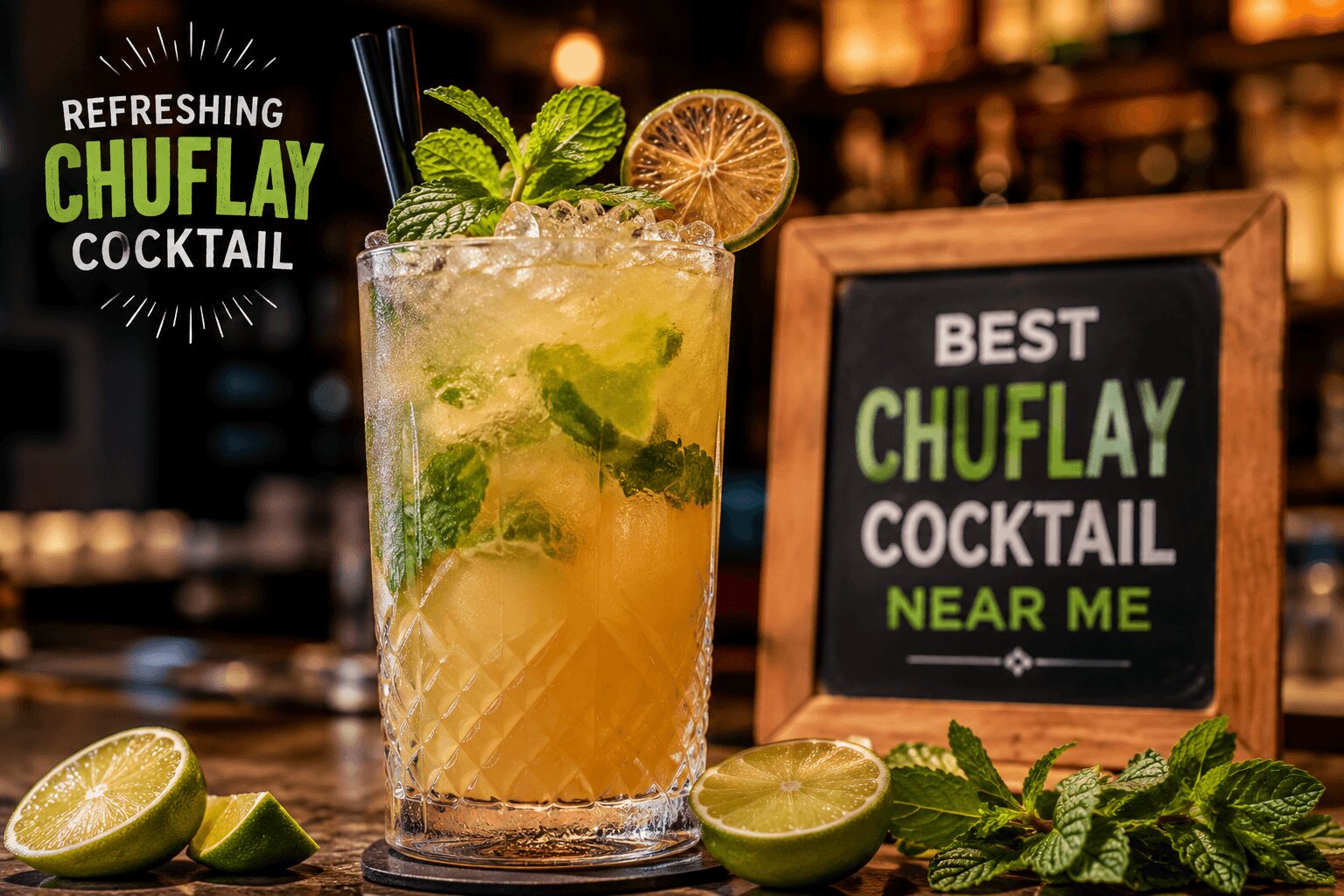
If you’re hunting for the best chuflay cocktail near me, here’s the direct answer: look for a bar that actually stocks singani, Bolivia’s grape brandy, rather than substituting pisco or a random brandy, and serves it in a tall glass with fresh lime and real ginger ale, not a flat soda gun mix. That one ingredient swap, singani versus a substitute, is the difference between an authentic chuflay and a watered-down imitation.
I first watched someone make a proper chuflay at a small Bolivian restaurant, and I noticed the bartender didn’t even reach for a jigger. He poured by eye, added ginger ale until the glass filled about three-quarters, and finished with a hard squeeze of lime before dropping the spent wedge right into the drink. That casual, unmeasured style is actually part of how it’s traditionally made at home in Bolivia, and it threw me off the first time because I expected something more cocktail-bar-precise.
What a Chuflay Actually Is
A chuflay is Bolivia’s national highball, built from singani, which is a grape brandy distilled specifically in the high altitude Bolivian valleys, mixed with ginger ale and a squeeze of lime, then served over ice in a tall glass. Compared to something like a brandy and cola, it drinks almost like a spiked ginger ale rather than a heavy after-dinner sipper, which is part of why it works so well on a hot afternoon.
The name itself is said to come from “short leg,” a nickname British railway workers gave the drink generations ago in Bolivia, though no one can confirm which version of that story is accurate. Either way, the drink stuck around and became something closer to a national symbol than a bar trend.
Why “Near Me” Searches Are Tricky for This Drink
Singani is genuinely hard to find in a lot of US states, and this is the part most guides never actually explain. Liquor import and distribution rules are handled state by state, so a distributor might carry singani in one city and not even list it forty miles away. When I couldn’t find it locally, calling two or three South American or Latin-focused restaurants directly and asking their bar manager, not just the host, got me a straight answer faster than checking any menu online.
That means your search for the best chuflay cocktail near me might come up nearly empty even in a city with a decent bar scene, not because the drink isn’t good, but because the core ingredient isn’t stocked locally. I ran into this myself when I asked a well-reviewed cocktail bar if they had singani, and the bartender had never even heard of it. He offered to sub in pisco instead, which is close in spirit since both are grape brandies, but it changes the flavor noticeably. Pisco tends to taste sharper and more floral, while singani has a rounder, slightly earthy quality that comes from the altitude at which the grapes are grown at.
What Separates a Good Chuflay from a Bad One
The biggest tell is the ratio. A good chuflay tastes like ginger ale with a warm undercurrent of brandy, not the other way around, and definitely not a boozy drink that just happens to have a splash of soda in it. If your first sip tastes overwhelmingly like straight liquor, something was measured wrong.
Glassware matters more than people expect, too. A proper chuflay is served in a tall Collins-style glass with plenty of ice, never in a rocks glass or a small tumbler, since the whole point of the drink is that long, fizzy, easy drinking quality. A common example is when a bar serves it in a short glass with barely any ice, and the drink ends up flat and warm within ten minutes because there’s no room for the ice to keep it cold properly.
Ordering It When the Bar Doesn’t Stock Singani
If you’re searching for the best chuflay cocktail near me and keep striking out, it helps to know what to ask for as a backup. Requesting a pisco-based substitute is the most common workaround, and most bartenders who know South American spirits at all will understand the request immediately.
It’s worth being upfront that this isn’t a traditional chuflay anymore; once you swap the base spirit, it’s a close cousin. I don’t think there’s anything wrong with ordering the substitute version if that’s genuinely your only option nearby, but it’s honest to know going in that you’re getting a different drink with a similar spirit, not the real thing.
Regional and Bar-by-Bar Variations
I’ve had three chuflays in the same city that tasted like three different drinks. One bartender added a dash of Angostura bitters for depth, another kept it strictly to singani, ginger ale, and lime with nothing else, and a third built it noticeably sweeter by using a ginger ale with more sugar in it. None of those versions was wrong; they just reflected where the bartender learned the recipe.
Some places also serve it with a lime wheel floating on top instead of squeezing the juice directly in, which changes how sour the first few sips taste compared to the last few. It genuinely depends on where the recipe was learned and who’s making it, so don’t assume one bar’s version represents the whole category. If you try one chuflay and find it too sweet or too boozy, that’s likely a specific bar’s ratio issue, not a flaw in the drink itself.
ABV, Serving Style, and What to Expect
Singani typically sits around 40 percent alcohol by volume, similar to most brandies and whiskeys, but because a chuflay is mostly ginger ale and ice, the finished drink ends up far lighter than that number suggests. A standard pour usually works out to roughly one part singani to three or four parts ginger ale, which puts the overall drink somewhere in the range of a strong wine spritzer rather than a stiff cocktail.
This is worth knowing if you’re comparing it to something like a whiskey ginger, since a chuflay is meant to be sessionable and easy to drink two or three of over an evening, not a slow sipping drink. If a bar hands you one that tastes closer to straight brandy with a splash of soda, that’s simply not how it’s meant to be built.
Reasonable Price Expectations
At a casual Latin American or South American-focused restaurant, a chuflay typically runs somewhere in the 8 to 12 dollar range. At an upscale cocktail bar that treats it as a specialty or “hidden gem” menu item, the same drink can run 14 to 18 dollars, mostly because of the premium placement and presentation rather than a meaningfully different pour.
I paid 9 dollars for one at a small family-run Bolivian spot that used real singani and fresh lime, and it was noticeably better than a 16-dollar version I had later at a trendy bar that subbed in a generic brandy and used bottled lime juice instead of fresh. Price genuinely doesn’t guarantee you’re getting the real thing here.
How to Judge Quality Before You Order
A few small questions can save you from a disappointing drink. Ask directly whether the bar uses singani specifically, not just “a brandy,” since the answer tells you immediately whether you’re getting an authentic version or a substitute. A bartender who knows the drink will usually light up a little at the question, since it’s not something most guests ask about.
You can also glance at the garnish before it arrives. A fresh lime wedge squeezed and dropped in signals more care than a lime wheel perched decoratively on the rim that never actually touches the drink. It’s a small detail, but it usually lines up with how seriously the bar treats the rest of the recipe.
Bringing It All Together
If you’re still searching for the best chuflay cocktail near me and coming up empty, try widening your search past cocktail bars entirely. Bolivian, Peruvian, and general South American restaurants stock singani far more reliably than trendy bars do, even ones without a dedicated cocktail program, simply because it’s a spirit their regular customers actually ask for.
A restaurant with no craft cocktail menu at all has, in my experience, been a better bet for finding real singani than a well-reviewed bar with an impressive drink list but no South American spirits behind the counter.
Frequently Asked Questions
What is a chuflay cocktail exactly?
A chuflay is Bolivia’s national highball, made from singani, a Bolivian grape brandy, mixed with ginger ale and fresh lime, then served over ice in a tall glass. It’s meant to be light, fizzy, and easy to drink rather than strong or boozy.
Is a chuflay strong?
Not really. Singani itself is around 40 percent alcohol, but a chuflay is mostly ginger ale and ice, so the finished drink is closer in strength to a wine spritzer than a stiff cocktail, even though it uses hard liquor as its base.
Can I get a chuflay if my bar doesn’t carry singani?
Yes, many bartenders will substitute pisco, another grape brandy, since it’s the closest available spirit. It won’t taste identical to a traditional chuflay, since singani has a rounder, earthier flavor, but it’s considered an honest and common substitute.
Is a chuflay gluten-free?
Yes, since singani is distilled from grapes rather than grain, and ginger ale and lime contain no gluten. It’s generally a safe option for people avoiding gluten, though it’s always smart to confirm the specific ginger ale brand a bar uses if you have a severe sensitivity.
Why is it hard to find a chuflay cocktail near me?
Because singani isn’t distributed in every US state due to varying liquor import and distribution laws, many bars simply don’t stock it, even in cities with strong cocktail scenes, which makes this drink harder to find than its simple ingredient list would suggest.
What glass should a chuflay be served in?
A tall Collins-style glass, filled generously with ice. Serving it in a short rocks glass with little ice is a common shortcut that causes the drink to lose its cold, fizzy quality much faster than it should.
Read Also: Best Sopa Criolla Near Me: How to Find an Authentic Bowl Worth Driving For
